Know what needs to be done before you hire a contractor to do it.
Roofing Analysis & Consulting LLC (RAC) provides independent roofing and building-envelope investigation. After a suspected loss, start with: What actually happened? Documenting conditions before planned repair, replacement or demolition can preserve evidence and help owners make informed decisions.
One job. One budget. Somebody on the owner’s side.
Why hire RAC before hiring the contractor?
A contractor is responsible for its proposal, its work, its schedule, and its contract. RAC works for the owner and provides the independent control the owner otherwise does not have.
Contractor first
The contractor looks at the problem, decides what should be done, prices the work, performs the work, and tells the owner when it is complete.
RAC first
RAC determines what failed, writes the scope, helps compare qualified bids, inspects the work as it is performed, and verifies completion before final payment.
RAC is not there to make the job cost more. RAC is there to make sure the money is spent on the work the building actually needs—and that the owner gets what was paid for.
One accountable path from uncertainty to verified completion.
Each stage produces the information required for the next decision. Construction does not lead the investigation; evidence leads the project.
Diagnose
Identify the problem, test likely causes, and distinguish symptoms from the underlying failure.
Design
Turn verified findings into repair requirements, details, specifications, and a clear scope.
Bid
Give qualified bidders the same defined scope so proposals can be compared responsibly.
Build
Clarify field conditions and document whether critical work follows the approved requirements.
Verify
Inspect, test, photograph, and confirm that required corrections were completed properly.
Pay
Authorize final payment against verified work and complete supporting documentation.
Start with what the building needs—not with what someone wants to sell.
Most roofing problems become expensive when the wrong question is answered first.
Should I hire a roofing consultant or a roofer first?
If the problem, cause, or required scope is uncertain, hire the consultant first. A roofer can price and perform the work after the work has been properly defined.
How do I know whether I really need a new roof?
Age, leaks, or visible damage do not answer that question by themselves. The roof and connected building conditions must be inspected before repair, replacement, or continued maintenance can be justified.
Why are my roofing bids so different?
The contractors may not be pricing the same work. If the scope, materials, quantities, details, and responsibilities are different, the totals cannot be compared fairly.
Who makes sure the contractor does the work correctly?
Someone must inspect the critical work while it is still visible. RAC documents deficiencies, checks the work against the scope, and verifies completion before final payment is released.
Evidence-based support for the decisions in front of you.
RAC supports owners, facility teams, attorneys, insurers, designers, and contractors with independent investigation, documentation, repair planning, and verification.
Forensic Roof & Building Envelope Inspections
Independent investigation of roof systems, envelope assemblies, damage patterns, and failure conditions.
Building Envelope & Moisture Diagnostics
Assessment of water intrusion, vapor movement, air leakage, insulation, and connected material effects.
Insurance Claim Consulting & Appraisal Support
Technical causation, scope, repairability, documentation, and claim support grounded in field evidence.
Specification Review & Quality Assurance Oversight
Review of repair requirements, product use, sequencing, workmanship, and critical construction details.
Expert Witness & Dispute Resolution Consulting
Defensible technical analysis for disputed building conditions, construction defects, and property losses.
Preventive Maintenance & Performance Planning
Condition-based planning that helps owners prioritize risk, budget responsibly, and extend service life.
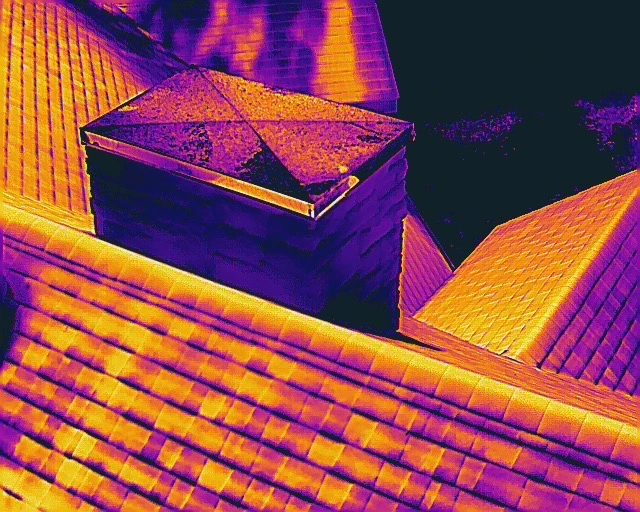
Measured, documented, and organized so the next decision can be defended.
A structured technical record—not a collection of opinions.
RoofingLogix™ is the operating, technical publishing, and consulting platform of Roofing Analysis & Consulting LLC (RAC).
RoofingLogix organizes field observations, photographs, moisture readings, thermal findings, construction details, causation analysis, repair requirements, bids, and verification records.
What the physical evidence demonstrates.
What remains uncertain and how it should be tested.
What the evidence means for scope, cost, construction, and payment.
See what changes when the building is diagnosed first.
RoofingLogix case studies connect the original concern to field evidence, repair requirements, and verification—without hiding uncertainty or skipping the decision path.
From visible symptom to failure mechanism
Follow how observations, testing, and building history distinguish the apparent problem from the actual cause.
- Field conditions
- Testing and measurements
- Causation findings
From findings to defensible repair requirements
See how verified conditions become a clear scope that contractors can price and project teams can evaluate.
- Repairability
- Details and specifications
- Comparable bid requirements
From construction to documented verification
Review how critical work, testing, closeout evidence, and unresolved items support final acceptance and payment.
- Construction observations
- Performance checks
- Verified completion
RAC works for the people responsible for the building and the money being spent.
The assignment changes, but the responsibility does not: establish the facts, define the work, and document what was actually done.
Property Owners & Associations
Independent answers before repair or replacement work is authorized.
Commercial & Facility Teams
A defined scope, comparable bids, field checks, and documented completion.
Attorneys, Adjusters & Insurers
Causation, scope, repairability, standards, and defensible documentation.
Architects, Contractors & Project Teams
Failure analysis, constructability review, quality checks, and verification.
Building knowledge for better property decisions.
Explore practical building-science guidance drawn from standards, testing methods, field experience, and the questions owners and professionals face before work begins.
Technical Standards & Methods
Reference material covering industry standards, testing protocols, performance requirements, and the basis for technical conclusions.
RAC Technical Library
Read complete RAC Technicals with the author’s analysis, source references, citation guidance and corresponding PDFs.
Building Science Articles
Plain-language guidance about assemblies, airflow, vapor, moisture, materials, weather, claims, and project decisions.
Owner Tools & Guides
Checklists, preparation guides, and questions that help owners define risk before authorizing work.
Conclusions should show their work.
RAC connects field experience, recognized standards, documented testing, and project-specific evidence so decision-makers can understand how a conclusion was reached.
Standards-based analysis
Technical conclusions tied to applicable standards, manufacturer requirements, assemblies, and observed conditions.
Documented testing
Inspection and testing methods selected to answer defined questions—not to support a predetermined conclusion.
Multi-climate experience
Building analysis across multiple climate zones, property types, roof systems, and envelope conditions.
Know what needs to be done before you commit the budget.
Bring RAC in before the scope is locked, the bids are compared, or the critical work is covered. We will help establish what the building needs and what the owner should require.